
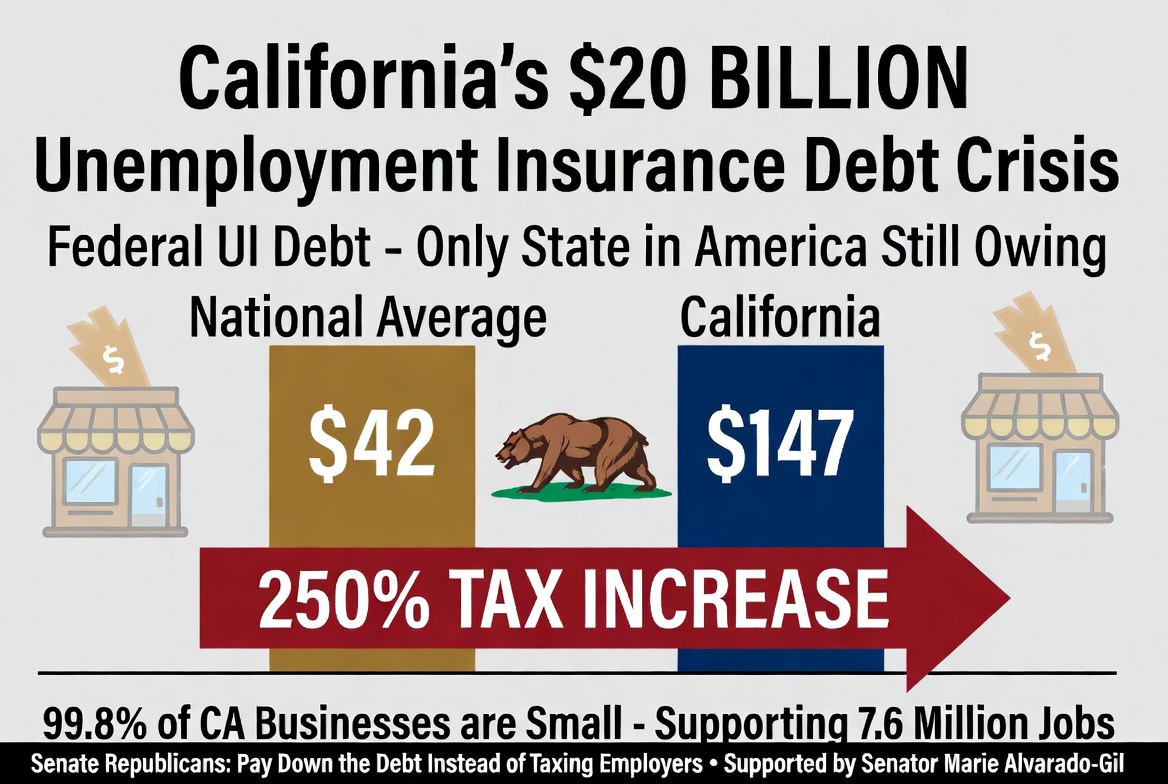
Senator Marie Alvarado-Gil (R–Jackson) voiced strong support for a Senate Republican floor effort aimed at addressing California’s $20 billion federal unemployment insurance (UI) debt without imposing crippling new costs on job creators.
The Republican caucus sought to pay down the longstanding debt than passing the burden directly onto employers through a dramatic payroll tax increase. Despite the proposal’s focus on practical relief for businesses, it failed on a party-line vote.
“California’s small businesses are the backbone of our economy and the heart of our communities in the Sierra foothills and the Central Valley,” said Senator Alvarado-Gil. “They already face some of the highest costs in the nation. We cannot afford to make it even harder for them to operate, hire workers, and stay open. Supporting this measure is about keeping California affordable for the families and employers who call our district home.”
Key Facts on the Unemployment Insurance Debt Crisis:
California is the only state in the nation that has not repaid its federal UI debt.
The debt, totaling roughly $20 billion, stems from pandemic-era mismanagement and widespread fraud at the Employment Development Department (EDD), while businesses were forced to remain closed.
Starting in January 2027, employers will face a 250% increase in UI payroll taxes, rising from a base of $42 per employee to $147 per employee.
This new 5.2% payroll tax rate will hit small businesses hardest. Small businesses make up 99.8% of all businesses in California and support 7.6 million jobs.
Senator Alvarado-Gil emphasized that this tax increase represents a direct threat to affordability and economic competitiveness in her district.
“During the budget surplus years, Sacramento chose not to pay down this debt,” Alvarado-Gil continued. “Now, instead of holding state government accountable for its failures, the majority party is shifting the cost onto local employers. That’s not fair, and it’s not sustainable. We must find responsible ways to address this debt while protecting the jobs and small businesses that keep our communities thriving.”
The Senator remains committed to solutions that reduce costs for families and businesses, promotes accountability at the EDD, and prioritize economic recovery across California.